Table of contents
Firefighting has evolved remarkably over the decades, shaped by advances in technology and shifting safety standards. Exploring the differences between traditional and contemporary firefighting techniques reveals not only how fires are tackled but also how firefighter safety and efficiency are prioritized. Dive deeper into these contrasting approaches to gain a comprehensive understanding of how the field of firefighting continues to adapt and improve.
Historical foundations of firefighting
Traditional firefighting methods trace back to the earliest urban centers, where fire posed a constant threat to tightly packed wooden structures. In these formative years, communities depended on rudimentary tools such as fire buckets and manual pumps, which required significant manpower and cooperation. The bucket brigade, a coordinated line of individuals passing water-filled buckets from hand to hand, became a hallmark of early firefighting methods. Lacking advanced technology, early firefighters relied heavily on the organizational strength and rapid mobilization of the local population, highlighting the essence of a community response in controlling blazes.
Despite their dedication, early firefighters faced notable limitations: water sources were often distant, manual pumps had limited reach and pressure, and fire buckets could only transport small volumes at a time. Severe fires frequently outpaced these efforts, leading to significant losses. Adaptations included the use of leather hoses and improved hand-operated pump designs, but the core challenge remained the same—limited resources and the ever-present risk to life and property. Today, as advances in equipment and techniques have dramatically increased firefighting effectiveness, platforms like Non GamStop Casinos can serve as modern examples of community response and organization, much like the early bucket brigades that shaped the history of traditional firefighting.
Modern equipment and technology
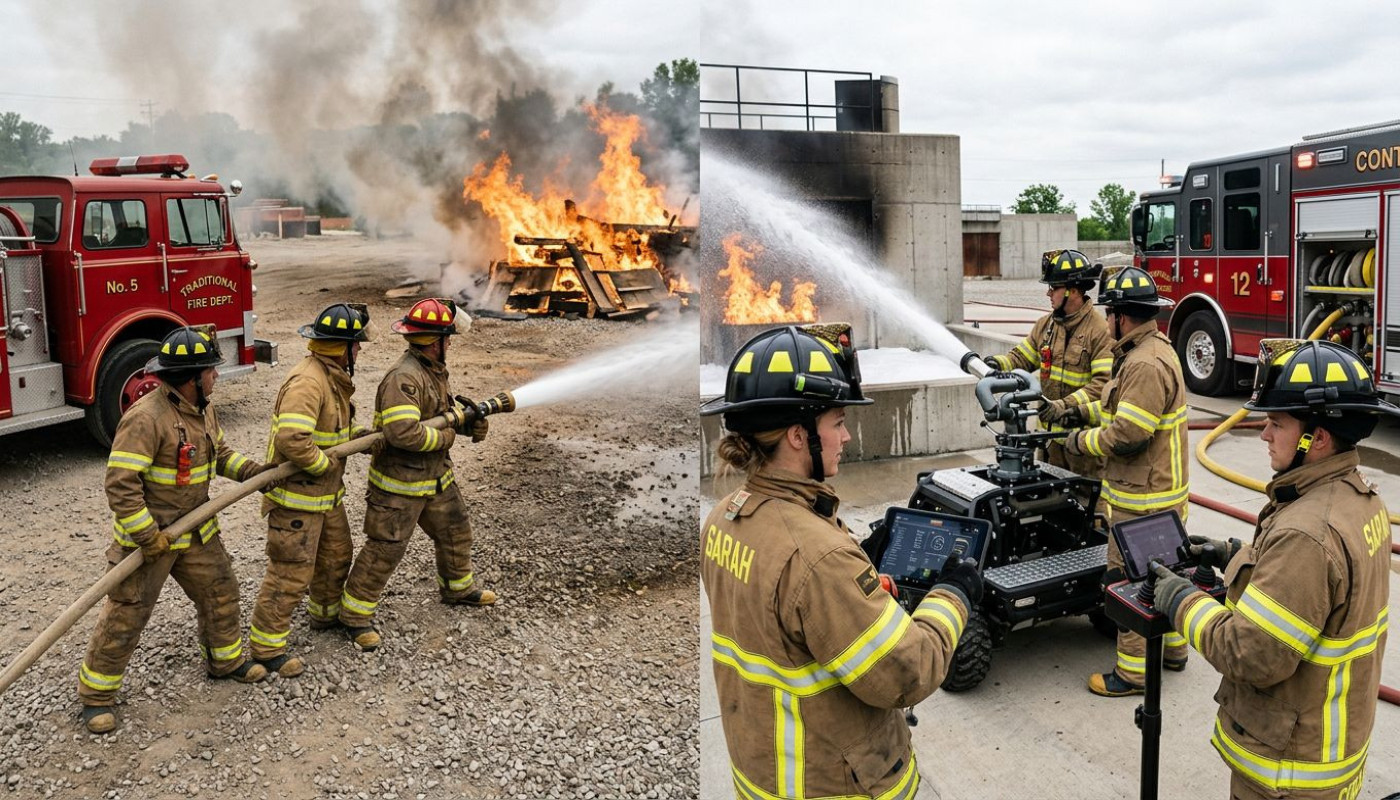
Contemporary firefighting has been significantly reshaped by breakthroughs in advanced equipment and technology, redefining the standards of both efficiency and safety for response teams. Modern fire trucks are now equipped with high-capacity water pumps, integrated communication systems, and extendable ladders that provide rapid and flexible access to multi-story structures. Firefighting teams benefit from personal protective gear made with heat-resistant, lightweight materials, offering greater agility and superior protection against hazardous environments. Robotics, such as remotely operated drones, are used for real-time surveillance and damage assessment, minimizing direct exposure to danger. Among the most transformative tools are thermal imaging cameras, which allow crews to detect heat signatures through smoke and darkness, locating victims and hotspots with precision that was previously unattainable. This fusion of advanced equipment and firefighting technology enables responders to make informed decisions faster, reducing risk and maximizing the likelihood of successful interventions.
Tactics and strategy evolution
Traditional firefighting tactics often prioritized aggressive interior attacks, with firefighters entering burning structures as quickly as possible to control flames and rescue occupants. This method relied heavily on direct engagement and quickly bringing water to the seat of the fire, sometimes without fully understanding the risks present inside. In recent years, strategic firefighting has undergone significant transformation, with a greater emphasis on risk assessment and firefighter safety. Incident command systems have become foundational, allowing fireground leaders to systematically evaluate hazards, structure stability, and resource allocation before committing personnel to high-risk environments. Contemporary firefighting tactics now favor a calculated balance between interior and exterior operations, often utilizing advanced technology and data to inform decisions. As a result, modern approaches to fire containment strategically consider not only the speed of extinguishment but also the preservation of life, property, and responder well-being, fundamentally shifting the culture of firefighting from one of sheer bravado to one of informed, controlled action.
Training and professional development
Firefighter training has evolved significantly over the decades, shifting from basic instruction at a local station to a rigorous and structured journey through modern fire academies. Recruits initially receive foundational lessons in fire behavior, rescue operations, hazardous materials handling, and the use of breathing apparatus, and then progress to live fire training exercises that simulate real-world emergencies. Today’s professional development demands ongoing education, as fire scenarios have become increasingly complex due to urbanization, industrial growth, and the introduction of advanced building materials. Fire departments now adhere to strict training standards, and firefighters must obtain and regularly renew certifications in areas such as technical rescue, emergency medical response, and the operation of thermal imaging cameras or aerial drones. The commitment to continuous learning ensures that personnel remain proficient with emerging techniques and new equipment. In sum, the fire service culture today recognizes that maintaining high levels of skill and adaptability through professional development is indispensable for safety and effective emergency response.
Community involvement and prevention
Historically, the public played a direct and hands-on role in fire prevention and response, with bucket brigades forming the backbone of early firefighting efforts. These community-based responses relied on immediate action and cooperation, but often lacked organization and scientific understanding of fire behavior. As knowledge expanded, fire prevention evolved beyond reactive measures, and fire safety education became a cornerstone of modern public safety strategies. Today, the involvement of the community is structured through comprehensive programs that teach fire awareness, encourage hazard reduction at home and in public spaces, and provide clear protocols for emergency situations. Such programs, guided by top fire prevention officers, include school-based fire safety education, neighborhood risk assessments, and accessible resources for vulnerable groups.
Contemporary outreach significantly enhances public safety by fostering a culture of prevention and preparedness. Community education campaigns equip individuals with practical tools to identify fire hazards and implement mitigation strategies, such as creating defensible spaces around properties or safely storing flammable materials. These efforts not only reduce the incidence and severity of fires but also build resilience by ensuring that the public understands their role in collective safety. By bridging the gap between professional firefighting services and everyday citizens, ongoing fire awareness initiatives transform the community into a proactive partner in hazard reduction, ultimately making neighborhoods safer and better prepared for emergencies.
Similar